

How to Lose Weight Fast? 10 Easy and Scientific Ways | Complete Weight Loss Guide (2026)
हिंदी में जानने के लिए क्लिक करे
Introduction
Nowadays, obesity is no longer just a cosmetic concern—it has become a major health issue. Excess body weight can increase the risk of serious diseases such as diabetes, high blood pressure, heart disease, fatty liver, and joint pain. So, maintaining a healthy weight is essential for overall well-being.
Many people search online for terms like “How to lose weight in 7 days,” “How to lose 10 kg in one month,” or “How to lose weight without going to the gym.” But, the truth is that healthy and sustainable weight loss requires a balanced diet, regular exercise, and a healthy lifestyle.
In this article, we will discuss 10 easy, safe, and scientifically supported ways to lose weight naturally and maintain your fitness in the long run.
Main Causes of Weight Gain
Weight gain can occur due to several reasons. Some of the most common causes include:
- Consuming high-calorie foods
- Lack of physical activity
- Sitting for long hours
- Poor sleep habits
- Stress and anxiety
- Hormonal imbalance
- Frequent consumption of fast food and sugary drinks
- Irregular eating habits
Once you identify the reason behind your weight gain, it becomes much easier to create an effective weight-loss plan.
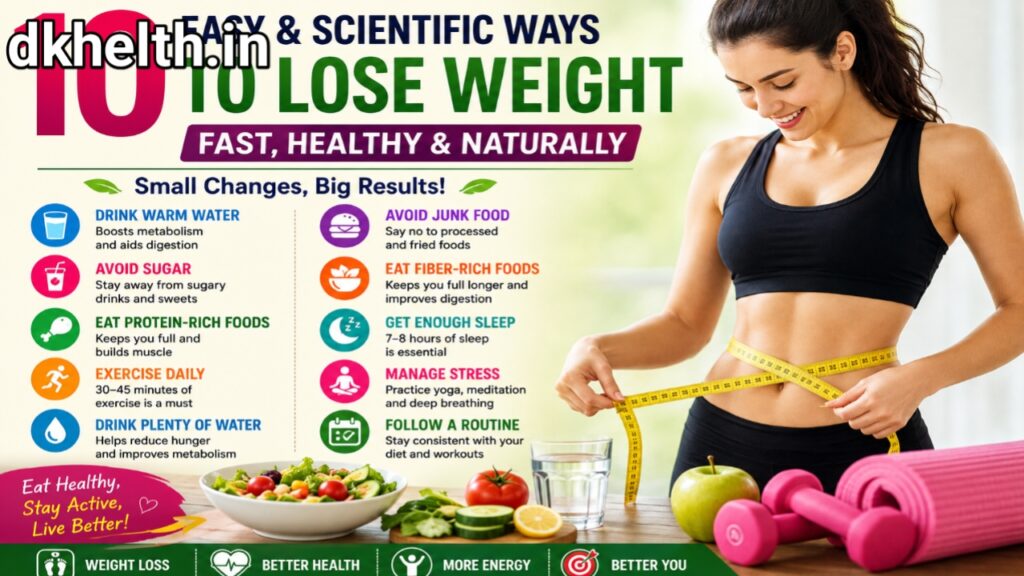
10 Easy Ways to Lose Weight
- Start Your Morning with Warm Water
Drinking one or two glasses of warm water on an empty stomach helps keep your body hydrated and supports healthy digestion. It also prepares your body for the day ahead.
Many people prefer adding lemon to warm water. While lemon water alone does not burn fat, it can be a healthy addition to your daily routine.
- Reduce Sugar and Sugary Drinks
If you truly want to lose weight, reducing added sugar should be your first priority.
Avoid:
- Soft drinks
- Packaged fruit juices
- Sweets
- Cakes
- Chocolates
- Sweetened tea and coffee
Instead, choose:
- Plain water
- Coconut water
- Buttermilk
- Unsweetened green tea
- Eat More Protein-Rich Foods
Protein is one of the most important nutrients for weight loss. It helps you stay full for longer, reduces unnecessary snacking, and supports muscle maintenance.
Healthy protein sources include:
- Eggs
- Lentils
- Cottage cheese (Paneer)
- Soy chunks
- Milk
- Yogurt
- Chicken
- Fish
Try to include a source of protein in every meal.
- Exercise for at Least 30–45 Minutes Daily
Diet alone isn’t enough for successful weight loss. Regular physical activity is equally important.
You can choose any of the following exercises:
- Brisk walking
- Running
- Cycling
- Yoga
- Jump rope
- Dancing
- Bodyweight workouts at home
Aim to exercise at least five days a week.
- Drink Plenty of Water
Sometimes your body confuses thirst with hunger, causing unnecessary eating.
Drink around 2.5–3 liters of water every day.
Drinking water about 20–30 minutes before meals may help you avoid overeating.
Common Mistakes to Avoid During Weight Loss
- Skipping meals completely
- Following an extremely low-calorie diet
- Taking weight-loss medicines without medical advice
- Checking your weight every single day
- Depending only on unverified home remedies found online
Healthy and gradual weight loss is considered the safest and most sustainable approach.
Conclusion
Losing weight isn’t magic—it is the result of healthy habits practiced consistently. By eating nutritious foods, exercising regularly, staying hydrated, and maintaining a healthy lifestyle, you can achieve lasting weight loss over time. The key is patience, consistency, and making small improvements every day.
Here’s Part 2 of your English translation.
और मजेदार हिंदी में पढ़ना है तो क्लिक करें
How to Lose Weight Fast? (Part 2)
- Avoid Junk Food and Processed Foods
If you want to lose weight, one of the first steps is to reduce your intake of junk and processed foods. These foods are usually high in calories, unhealthy fats, sugar, and sodium, which can contribute to weight gain.
Foods to Avoid:
- Pizza
- Burgers
- French fries
- Potato chips
- Packaged snacks
- Biscuits and cakes
- Instant noodles
Healthier Alternatives:
- Fresh fruits
- Green salads
- Sprouts
- Mixed nuts
- Yogurt
- Oats
7. Eat More Fiber-Rich Foods
Fiber helps you stay full for longer, reducing hunger and preventing overeating.
Best Sources of Fiber:
- Oats
- Brown rice
- Porridge
- Apples
- Guava
- Oranges
- Green leafy vegetables
- Chia seeds
- Flaxseeds
- Get Enough Sleep
Poor sleep can increase hunger hormones, making you feel hungry more often and leading to overeating.
Aim for 7–8 hours of quality sleep every night** for better weight management and overall health.

- Reduce Stress
Stress can trigger emotional eating, causing people to consume more calories than needed.
Ways to Reduce Stress:
- Practice yoga
- Meditate daily
- Take deep breaths
- Listen to relaxing music
- Spend quality time with family and friends
- Follow a Consistent Daily Routine
Maintaining a regular schedule for waking up, eating meals, exercising, and sleeping helps improve your metabolism and supports long-term weight management.
7-Day Simple Weight Loss Diet Plan
Early Morning
- 1–2 glasses of warm water
- Or lemon water (without sugar)
Breakfast
- Oatmeal
- Porridge
- Boiled eggs
- Sprouted green gram
- Milk
Mid-Morning Snack
- Apple
- Papaya
- Guava
- Coconut water
Lunch
- 2 whole wheat chapatis
- Lentils (Dal)
- Green vegetables
- Fresh salad
- Yogurt
Evening Snack
- Green tea
- Roasted chickpeas
- A small handful of peanuts Dinner
- Light vegetable curry
- Lentils
- Fresh salad
- 1–2 whole wheat chapatis
Avoid eating heavy meals just before bedtime.
Easy Home Exercises for Weight Loss
- 30 minutes of brisk walking
- 20 squats
- 15 push-ups (or knee push-ups for beginners)
- 30-second plank
- 5–10 minutes of jump rope
- 5–10 rounds of Surya Namaskar (Sun Salutation) What Not to Do While Losing Weight
- don’t starve yourself.
- Avoid crash diets.
- don’t rely only on fruits for your meals.
- Never take weight-loss supplements without professional advice.
- Avoid eating late at night.
- don’t remain physically inactive throughout the day. Benefits of Weight Loss
Losing excess weight offers numerous health benefits, including:
- Feeling lighter and more energetic
- Reduced risk of type 2 diabetes
- Better blood pressure control
- Improved heart health
- Increased self-confidence
- Better sleep quality
- Reduced pressure on joints
- Improved physical fitness and mobility Conclusion
Healthy weight loss isn’t about following extreme diets or quick fixes. It is about making sustainable lifestyle changes, eating nutritious foods, staying physically active, and maintaining consistency. Small daily improvements can lead to significant long-term results.
the final section of your professional English translation.
How to Lose Weight Fast? (Part 3)
Common Weight Loss Myths
Myth 1: Skipping Meals Helps You Lose Weight Faster
Reality: Skipping meals can slow down your metabolism and may lead to overeating later in the day. Your body also misses essential nutrients, making weight loss less effective in the long run.
Myth 2: Green Tea Alone Can Burn Fat
Reality: Green tea is a healthy beverage, but it can’t reduce body fat on its own. It works best when combined with a balanced diet and regular exercise.
Myth 3: Going to the Gym Is the Only Way to Lose Weight
Reality: You can lose weight through home workouts, walking, jogging, cycling, yoga, or any physical activity. A healthy diet is just as important as exercise
Myth 4: You Should Completely Avoid Carbohydrates
Reality: Your body needs carbohydrates for energy. Instead of eliminating carbs, choose healthier options like oats, brown rice, whole grains, and vegetables.
Daily Weight Loss Routine
6:00 AM
Wake up and drink 1–2 glasses of water.
6:30 AM
Go for a 30–45 minute walk, practice yoga, or do light exercise
Eat a protein-rich and fiber-rich breakfast.
Lunch
Have a balanced meal with vegetables, whole grains, and a healthy protein source.
Evening
Enjoy green tea or another sugar-free beverage with a light snack.
Dinner
Eat a light dinner at least 2–3 hours before bedtime.
Sleep on time and aim for 7–8 hours of quality sleep.
Helpful Tips for Faster Weight Loss
- Walk at least 8,000–10,000 steps every day.
- Use stairs instead of elevators whenever possible.
- Drink water throughout the day instead of consuming sugary beverages.
- Limit fried and fast foods.
- Weigh yourself once a week to track progress.
- Set realistic goals, such as losing 2–3 kg first. Frequently Asked Questions (FAQ)
- Can I lose 5 kg in one month?
It may be possible for some people depending on their starting weight, diet, activity level, and overall health. But, rapid weight loss isn’t suitable or safe for everyone.
- Can I lose weight without going to the gym?
Yes. Walking, jogging, cycling, yoga, and home workouts can all help you lose weight.
- Should I skip dinner to lose weight?
No. Instead of skipping dinner, choose a light and balanced evening meal.
- Does lemon water help with weight loss?
Lemon water alone does not burn fat, but it can be a refreshing, low-calorie drink as part of a healthy lifestyle.
- How much water should I drink daily?
Most adults benefit from about 2–3 liters of water per day, although individual needs vary.
- Do fruits cause weight gain?
No. Fresh fruits are rich in vitamins, minerals, and fiber and can be part of a healthy weight-loss diet when eaten in moderation.
- Should I completely avoid sugar?
Reducing added sugar is beneficial, but the overall quality and balance of your diet matter most.
- Is eating late at night harmful?
Eating large meals late at night may make weight management more difficult for some people.
9. Is daily exercise necessary?
Regular physical activity on most days of the week is recommended for overall health and weight management.
- What is the best way to lose weight?
The most effective approach is to combine a balanced diet, regular exercise, adequate sleep, stress management, and consistency.
Final Conclusion
Weight loss is a gradual process that requires patience and commitment. Instead of following miracle diets or quick-fix solutions, focus on building healthy habits that you can maintain for life. Eating nutritious foods, staying active, sleeping well, and managing stress are the foundations of sustainable weight loss.
If you have diabetes, thyroid disorders, heart disease, or any other medical condition, consult a qualified doctor or registered dietitian before starting a weight-loss progra
- How to Lose Weight Fast
- Easy Weight Loss Tips
- Weight Loss Guide
- Belly Fat Reduction
- Weight Loss Diet Plan
- Healthy Weight Loss
- Home Workout for Weight Loss
how-to-lose-weight-fast
Healthy woman measuring waist with tape while following a weight loss diet and fitness routine