
Why Do White Mouth Ulcers Occur? Causes, Types, Symptoms, and Complete Information – Part 1
Why Do White Mouth Ulcers Occur? Causes, Types, Symptoms, Home Remedies & Expert Treatment Guide
White mouth ulcers are one of the most common oral health problems that almost everyone experiences at some point in life. They usually begin as a small white or yellow sore inside the mouth and can become increasingly painful over the next few days. Eating, drinking, brushing your teeth, or even talking may become uncomfortable.
Although most mouth ulcers are harmless and heal on their own within one to two weeks, frequent or long-lasting ulcers may sometimes indicate an underlying nutritional deficiency or a more serious medical condition. So, ulcers that keep recurring, last longer than two to three weeks, or are accompanied by symptoms such as fever, unexplained weight loss, or difficulty swallowing should be evaluated by a healthcare professional.
This article explains what white mouth ulcers are, their different types, common causes, symptoms, risk factors, and when medical attention is necessary.
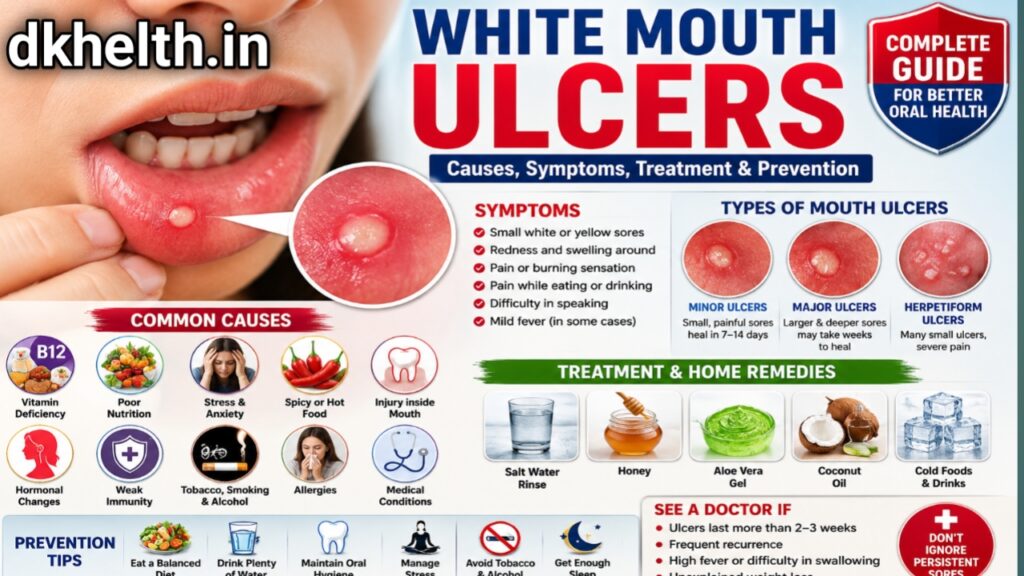
What Are White Mouth Ulcers?
White mouth ulcers are small, painful sores that develop on the soft tissues inside the mouth. They can appear on:
- The tongue
- Inside the lips
- Inside the cheeks
- The gums
- The roof of the mouth (palate)
- Near the throat
- Under the tongue
Most ulcers have a white or yellow center surrounded by a red, inflamed border.
In most cases, these ulcers are not contagious, meaning they can’t spread from one person to another through normal contact. But, sores caused by certain viral infections may behave differently.
Common Causes of White Mouth Ulcers
- Vitamin and Mineral Deficiencies
One of the most common reasons for recurring mouth ulcers is a deficiency of essential nutrients, including:
- Vitamin B12
- Folic acid
- Iron
- Zinc
These nutrients are important for maintaining healthy oral tissues.
2. Digestive Problems
Poor digestive health may increase the likelihood of mouth ulcers. Conditions that may contribute include:
- Constipation
- Acid reflux
- Gastric acidity
- Chronic digestive disorders
3. Stress and Anxiety
Emotional stress is considered one of the leading triggers of mouth ulcers.
Common contributing factors include:
- Chronic stress
- Anxiety
- Lack of sleep
- Mental fatigue
4. Spicy or Hot Foods
Very spicy foods, hot beverages, coffee, and extremely hot meals may damage the delicate lining of the mouth, increasing the risk of ulcer formation.
5. Injury Inside the Mouth
Accidental injuries are another common cause.
Examples include:
- Accidentally biting the tongue or cheek
- Sharp or broken teeth
- Poorly fitted dentures
- Dental braces causing friction
6. Hormonal Changes
Women may develop mouth ulcers during:
- Menstrual periods
- Pregnancy
- Hormonal fluctuations
7. Weak Immune System
People with weakened immunity may experience mouth ulcers more frequently because the body’s natural defense system is less effective.
8. Allergic Reactions
Some individuals develop ulcers after exposure to:
- Certain foods
- Toothpaste ingredients
- Medications
- Oral care products
9. Smoking, Tobacco, and Alcohol
Tobacco products such as cigarettes, chewing tobacco, and gutkha, as well as excessive alcohol consumption, can damage the oral lining and increase the risk of oral diseases.
10. Underlying Medical Conditions
In some cases, mouth ulcers may be associated with medical conditions such as:
- Anemia
- Celiac disease
- Crohn’s disease
- Behçet’s disease
- Certain viral infections
- Immune system disorders
Types of White Mouth Ulcers
Not all mouth ulcers are the same. Healthcare professionals generally classify them into three main categories.
1. Minor Aphthous Ulcers
This is the most common type.
Characteristics
- Small in size
- White or pale yellow center
- Red border
- Usually heal within 7–14 days
- Normally don’t leave scars
2. Major Aphthous Ulcers
These ulcers are larger, deeper, and much more painful.
Characteristics
- May exceed 1 centimeter in diameter
- Can last for several weeks
- Make eating and speaking difficult
- May leave scars after healing
3. Herpetiform Ulcers
Despite the name, these ulcers are not caused by the herpes virus.
Characteristics
- Dozens of tiny ulcers appear simultaneously
- May merge into one larger ulcer
- Usually very painful
Where Can Mouth Ulcers Occur?
White mouth ulcers may develop on:
- Tongue
- Inside the lips
- Inner cheeks
- Gums
- Roof of the mouth
- Near the throat
- Floor of the mouth
Common Symptoms
Symptoms often include:
- White or yellow sore
- Red inflamed border
- Sharp or burning pain
- Pain while eating
- Increased discomfort with spicy or acidic foods
- Difficulty speaking
- Pain while opening the mouth
- Mild swelling around the ulcer
When Should You See a Doctor?
Medical evaluation is recommended if:
- The ulcer lasts longer than 2–3 weeks
- New ulcers continue appearing repeatedly
- The ulcers become unusually large
- You develop a high fever
- You experience unexplained weight loss
- Swallowing becomes difficult
- Bleeding occurs inside the mouth
- Swollen lymph nodes appear in the neck
A dentist or physician can determine whether the ulcer is caused by a simple condition or an underlying medical problem.
Who Is More Likely to Develop Mouth Ulcers?
The condition is more common among:
- Students
- People experiencing chronic stress
- Pregnant women
- Older adults
- Individuals with weakened immunity
- People with vitamin deficiencies
- Smokers and tobacco users
Are White Mouth Ulcers Cancer?
Most white mouth ulcers aren’t cancerous and heal naturally within a couple of weeks.
But, if a white patch or ulcer:
- Persists for more than 2–3 weeks
- Continues to enlarge
- Does not heal
- Occurs in someone who regularly uses tobacco or alcohol
it is important to seek medical evaluation as soon as possible. Early diagnosis can help detect serious conditions, including oral cancer, at an earlier and more treatable stage.
Coming in Part 2
- Treatment options
- Home remedies
- Medications
- Best foods to eat
- Foods to avoid
- Vitamins and supplements
- Children’s mouth ulcers
- Pregnancy-related mouth ulcers
- Oral hygiene tips
- Recovery time and medical treatment
White Mouth Ulcers: Treatment, Home Remedies, Medications, Diet, and Recovery – Part 2
Most white mouth ulcers heal on their own within 7 to 14 days without requiring special treatment. But, if the ulcers are extremely painful, recur frequently, or make eating and drinking difficult, proper treatment becomes important. The goal isn’t only to relieve pain but also to identify and treat the underlying cause.
Do White Mouth Ulcers Heal on Their Own?
Yes. Most minor mouth ulcers disappear naturally within one to two weeks.
Healing may occur faster if you:
- Maintain good oral hygiene
- Drink plenty of water
- Eat a balanced diet
- Avoid irritating foods
- Get enough sleep
But, ulcers that keep returning, become unusually large, or last longer than three weeks should be examined by a healthcare professional.
Home Remedies for White Mouth Ulcers
1. Warm Salt Water Rinse
A warm salt-water rinse is one of the simplest home remedies.
How to use:
- Mix ½ teaspoon of salt in one glass of warm water.
- Rinse your mouth for 30 seconds.
- Repeat 3–4 times daily.
This may help reduce irritation and keep the mouth clean.
2. Baking Soda Rinse
Baking soda may help neutralize acids inside the mouth.
How to use:
- Mix ½ teaspoon baking soda in one cup of water.
- Use it as a mouth rinse.
Some people also apply a small amount of baking soda paste directly around the ulcer. If irritation increases, discontinue use.
3. Honey
Pure honey has natural antibacterial and soothing properties.
Apply a small amount using clean hands or a cotton swab several times a day.
Important: Honey should not be given to children under one year of age.
4. Coconut Oil
Some people find relief by gently applying coconut oil to the affected area. It may also help keep the mouth moist.
5. Cold Foods and Drinks
Cold foods can temporarily reduce pain and burning.
Examples include:
- Cold water
- Sugar-free yogurt
- Small ice chips (avoid prolonged direct contact)
- Chilled milk, if tolerated
6. Drink Plenty of Water
Dehydration can make mouth discomfort worse.
Aim to drink enough water throughout the day to keep your mouth and body well hydrated.
Best Foods to Eat During Mouth Ulcers
Choose foods that are:
- Soft
- Mild
- Easy to chew
- Rich in nutrients
Recommended foods include:
- Yogurt
- Rice porridge
- Oatmeal
- Soft khichdi
- Moong dal
- Boiled vegetables
- Bananas
- Ripe papaya
- Watermelon
- Muskmelon
- Coconut water
- Milk (if well tolerated)
- Buttermilk
- Plain rice
Fruits That May Help
Many people tolerate these fruits well:
- Bananas
- Ripe papaya
- Pears
- Watermelon
- Muskmelon
- Apples (cut into small pieces)
If any fruit causes burning or discomfort, avoid it until the ulcer heals.
Foods to Avoid
Until the ulcer heals, try to avoid:
- Very spicy foods
- Excessively salty snacks
- Acidic foods that trigger pain
- Extremely hot tea or coffee
- Tobacco products
- Gutkha
- Cigarettes
- Alcohol
- Hard or crunchy foods
If a particular food repeatedly triggers ulcers, consider limiting or avoiding it.
Medical Treatment
If home care isn’t enough, a doctor or dentist may recommend treatment depending on the underlying cause.
Possible treatments include:
- Pain-relieving oral gels
- Anti-inflammatory medications
- Antiseptic mouthwashes
- Vitamin B12 supplements
- Iron supplements
- Folic acid supplements
- Zinc supplements
- Appropriate medications if an infection is present
Always take medicines exactly as prescribed by your healthcare provider.
Are Antibiotics Necessary?
Not usually.
Most common mouth ulcers are not caused by bacterial infections, so antibiotics are generally not required.
Never take antibiotics without medical advice.
The Role of Vitamins
People who develop frequent mouth ulcers may benefit from evaluation for nutritional deficiencies.
Doctors may recommend blood tests to check levels of:
- Vitamin B12
- Iron
- Folic acid
- Zinc
If a deficiency is found, appropriate supplementation may reduce recurrence.
Can Children Get White Mouth Ulcers?
Yes.
Children may develop mouth ulcers due to:
- Vitamin deficiencies
- Viral infections
- Accidental cheek or tongue biting
- Poor oral hygiene
Parents should consult a pediatrician if:
- The child refuses to eat or drink.
- A high fever develops.
- Multiple ulcers appear.
- The ulcers become severe.
Mouth Ulcers During Pregnancy
Some women develop mouth ulcers during pregnancy because of hormonal changes or nutritional deficiencies.
Pregnant women should never start medications without consulting their healthcare provider, as some medicines may not be suitable during pregnancy.
Should You Use Mouthwash?
An antiseptic mouthwash may be recommended by a healthcare professional.
But:
- Not all mouthwashes are suitable for everyone.
- Alcohol-containing mouthwashes may increase irritation in some individuals.
Always follow your dentist’s or doctor’s advice.
Should You Replace Your Toothbrush?
Yes, if your toothbrush is:
- Old
- Worn out
- Damaged
A soft-bristled toothbrush is generally recommended because it is gentler on the delicate tissues inside the mouth.
Why Is Oral Hygiene Important?
Good oral hygiene reduces irritation and helps create a healthier environment for healing.
Daily oral care should include:
- Brushing twice a day
- Cleaning the tongue gently
- Rinsing the mouth with water after meals
- Keeping the mouth clean throughout the day
How Long Do Mouth Ulcers Take to Heal?
Healing time depends on the type of ulcer.
- Minor ulcers: Usually 7–14 days
- Major ulcers: May require several weeks
If an ulcer persists for more than three weeks, seek professional medical evaluation.
Common Mistakes to Avoid
Avoid these habits while an ulcer is healing:
- Touching the ulcer repeatedly
- Popping or scratching the sore
- Taking medicines without medical advice
- Eating very spicy foods despite severe pain
- Continuing to smoke or use tobacco
- Ignoring persistent or recurring ulcers
When Should You Seek Immediate Medical Care?
Contact a healthcare provider promptly if:
- An ulcer lasts longer than 2–3 weeks
- New ulcers continue to appear frequently
- You develop a high fever
- Opening your mouth becomes very difficult
- Swallowing is painful or difficult
- You experience unexplained weight loss
- The ulcer continues to grow
- Bleeding occurs from the ulcer
Coming in Part 3
In the final part, you’ll learn:
- How to prevent white mouth ulcers
- Why ulcers keep coming back
- Frequently Asked Questions (FAQ)
- Oral cancer warning signs
- Prevention tips for children and older adults
- Final expert recommendations and conclusion
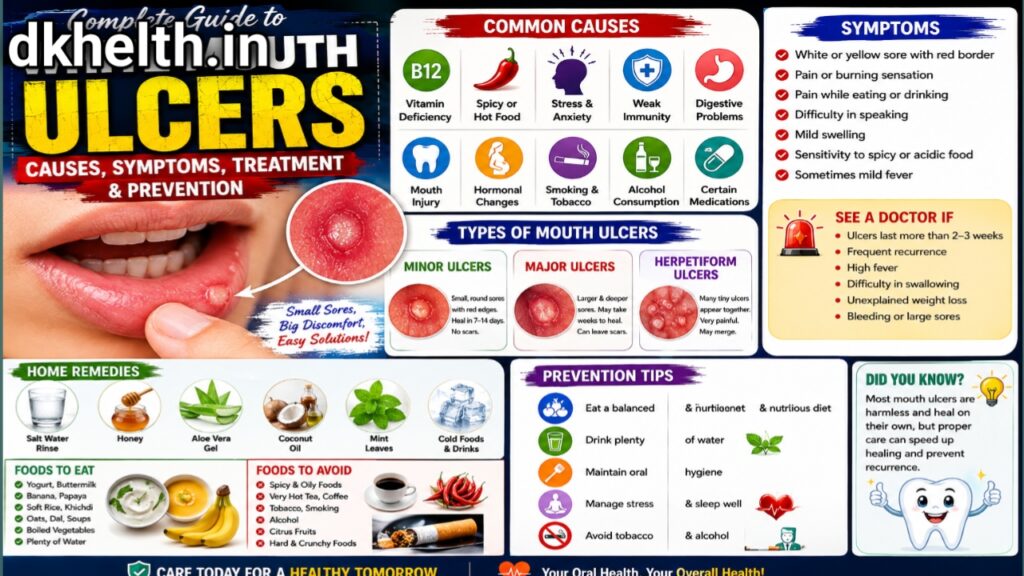
How to Prevent White Mouth Ulcers, Why They Keep Coming Back, FAQs, and Final Expert Advice – Part 3
White mouth ulcers are a common oral health problem. While most ulcers heal on their own, recurring ulcers can interfere with eating, drinking, speaking, and overall quality of life. Fortunately, adopting healthy habits and maintaining good oral hygiene can significantly reduce the risk of developing them.
This final section covers effective prevention strategies, reasons for recurring ulcers, frequently asked questions, and when you should seek medical attention.
Effective Ways to Prevent White Mouth Ulcers
1. Eat a Balanced Diet
Proper nutrition is one of the best ways to prevent recurrent mouth ulcers.
Include foods rich in:
- Vitamin B12
- Iron
- Folic acid
- Zinc
- Protein
- Fresh fruits and vegetables
- Whole grains
- Milk and yogurt
- Lentils and legumes
A nutrient-rich diet supports healthy oral tissues and strengthens the immune system.
2. Stay Hydrated
Drink plenty of water throughout the day.
Proper hydration helps:
- Keep the mouth moist
- Reduce dryness
- Support healthy oral tissues
3. Maintain Good Oral Hygiene
Healthy oral habits lower the risk of irritation and infection.
Daily routine:
- Brush your teeth twice a day.
- Clean your tongue gently.
- Rinse your mouth after meals.
- Replace your toothbrush regularly.
4. Use a Soft-Bristled Toothbrush
Hard toothbrushes can injure the delicate lining inside the mouth.
A soft-bristled toothbrush is usually a better choice.
5. Avoid Very Hot Foods and Drinks
Extremely hot tea, coffee, or food can burn the lining of the mouth and increase the likelihood of ulcers.
Allow hot foods and beverages to cool slightly before consuming them.
6. Reduce Stress
Stress is one of the most common triggers for recurrent mouth ulcers.
Healthy ways to manage stress include:
- Getting enough sleep
- Meditation
- Deep breathing exercises
- Yoga
- Regular physical activity
7. Quit Smoking and Tobacco
Smoking and tobacco products damage the tissues inside the mouth and increase the risk of serious oral diseases, including oral cancer.
Quitting tobacco benefits both your oral health and overall well-being.
8. Limit Alcohol Consumption
Excessive alcohol can irritate the oral lining and contribute to mouth problems.
Limiting alcohol intake supports better oral and general health.
9. Schedule Regular Dental Check-Ups
Visit your dentist regularly, especially if you have:
- Broken teeth
- Sharp teeth
- Poorly fitting dentures
- Orthodontic appliances causing repeated injury
Correcting these problems may prevent recurring ulcer
10. Check for Vitamin Deficiencies
If mouth ulcers occur frequently, your doctor may recommend blood tests to evaluate:
- Vitamin B12
- Iron
- Folic acid
- Zinc
Treating nutritional deficiencies often helps reduce recurrence.
Why Do Mouth Ulcers Keep Coming Back?
Recurring mouth ulcers may result from:
- Vitamin B12 deficiency
- Iron deficiency
- Folic acid deficiency
- Chronic stress
- Weak immune system
- Digestive disorders
- Hormonal changes
- Certain medications
- Food allergies or sensitivities
If ulcers occur every month or very frequently, consult a healthcare professional instead of relying only on home remedies.
Are White Mouth Ulcers Contagious?
Most common mouth ulcers aren’t contagious and can’t spread through kissing, sharing food, or close contact.
But, ulcers caused by certain viral infections may be contagious, making an accurate diagnosis important.
Are Recurring Mouth Ulcers in Children Normal?
Occasional mouth ulcers are common in children.
But, consult a pediatrician if:
- Ulcers occur repeatedly.
- The child refuses food or water.
- Weight loss develops.
- Fever accompanies the ulcers.
Should Older Adults Be More Careful?
Yes.
Any white patch or ulcer that does not heal within two to three weeks should be evaluated promptly in older adults because the risk of certain oral diseases increases with age.
Can Mouth Ulcers Turn Into Cancer?
Ordinary mouth ulcers don’t become cancer.
But, seek medical evaluation if a white or red patch:
- Lasts longer than 2–3 weeks
- Continues to enlarge
- Bleeds easily
- Does not heal
- Appears in someone who uses tobacco or alcohol regularly
Early diagnosis greatly improves treatment outcomes.
Frequently Asked Questions (FAQ)
1. How long do mouth ulcers usually last?
Most minor ulcers heal within 7–14 days.
2. Can I drink milk if I have mouth ulcers?
Yes, provided milk does not increase irritation or discomfort.
3. Is yogurt good for mouth ulcers?
Yes. Yogurt is generally soothing and may be comfortable for many people to eat.
4. Can I eat bananas?
Yes. Bananas are soft and are usually well tolerated.
5. Should I avoid citrus fruits?
If citrus fruits cause burning or pain, avoid them until the ulcer has healed.
6. Can spicy foods make ulcers worse?
Yes. Spicy foods often increase pain and irritation.
7. Should I touch the ulcer?
No. Repeated touching may increase irritation or introduce bacteria.
8. Is it normal to get mouth ulcers repeatedly?
Frequent recurrence should be medically evaluated to identify the underlying cause.
9. Can vitamin deficiencies cause mouth ulcers?
Yes. Deficiencies of Vitamin B12, iron, folic acid, and zinc are well-recognized causes of recurrent mouth ulcers.
10. Can mouth ulcers heal without treatment?
Yes. Most minor ulcers heal naturally within one to two weeks.
When Should You Visit a Doctor Immediately?
Seek medical advice without delay if:
- An ulcer lasts longer than three weeks
- Ulcers recur frequently
- The ulcers are unusually large or extremely painful
- Eating or swallowing becomes difficult
- A high fever develops
- Bleeding occurs from the mouth
- Unexplained weight loss occurs
- You notice a lump in the neck
- The white patch continues to grow
Final Conclusion
White mouth ulcers are a common condition that usually heals within a few days to two weeks. Maintaining a balanced diet, staying hydrated, practicing good oral hygiene, managing stress, and avoiding tobacco can help reduce the likelihood of recurrence.
Although most ulcers are harmless, persistent, recurrent, or unusually large ulcers should never be ignored. Rather than self-medicating, consult a doctor or dentist for a proper evaluation. Early diagnosis and appropriate treatment can successfully manage the underlying cause and help prevent future episodes.
With proper nutrition, healthy lifestyle habits, and timely medical care, most people can effectively prevent and manage white mouth ulcers while maintaining good oral health.