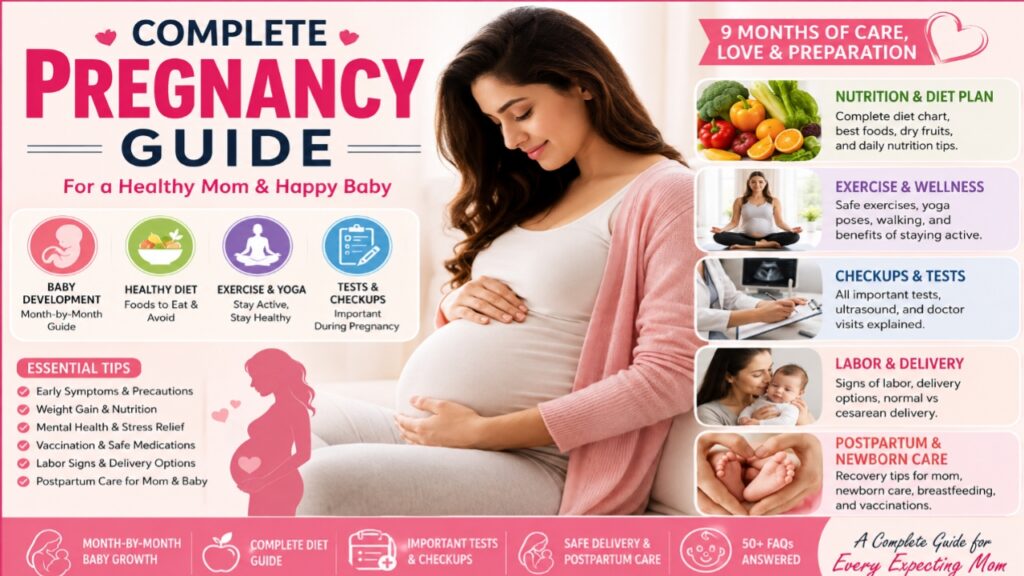
What Precautions Should Be Taken During Pregnancy? Complete Guide for Mother and Baby – Part 1
Hindi में पढ़ने के लिए click kare
What Is Pregnancy?
Pregnancy is one of the most important and sensitive stages in a woman’s life. During this period, a woman’s body undergoes numerous physical, emotional, and hormonal changes. At the same time, the baby growing inside the womb develops rapidly every week and every month. So, proper nutrition, regular prenatal check-ups, adequate rest, and following medical advice are essential for a healthy pregnancy.
A normal pregnancy typically lasts about 40 weeks (9 months). The mother’s health directly influences the baby’s growth and development. A balanced diet, reduced stress, and regular medical care significantly increase the chances of a healthy pregnancy and the birth of a healthy baby.
What Is Pregnancy?
Pregnancy begins when a sperm fertilizes an egg. The fertilized egg travels to the uterus and implants itself in the uterine lining. It then develops into an embryo, which gradually grows into a fetus and eventually becomes a fully developed baby.
Pregnancy is generally divided into three trimesters:
First Trimester: Months 1–3
Second Trimester: Months 4–6
Third Trimester: Months 7–9
Each trimester brings unique changes for both the mother and the baby.
Early Signs of Pregnancy
Although symptoms vary from woman to woman, common early signs include:
- Missed menstrual period
- Morning sickness (nausea and vomiting)
- Frequent urination
- Fatigue and weakness
- Tender or swollen breasts
- Changes in taste and smell
- Food cravings or aversions
- Mild dizziness
- Mood swings

If you experience these symptoms, take a home pregnancy test and consult a healthcare professional for confirmation.
How Is Pregnancy Confirmed?
Doctors may confirm pregnancy using the following methods:
- Urine pregnancy test
- Blood beta-hCG test
- Ultrasound examination
These tests help determine the presence, location, and development of the pregnancy.
Why Are the First Three Months So Important?
The first trimester is the most critical stage because the baby’s major organs begin to develop during this period. Lack of proper care may increase the risk of miscarriage or affect fetal development. So, extra caution is essential.
Essential Precautions During the First Trimester
- Visit Your Doctor Early
As soon as you know you are pregnant, schedule an appointment with an obstetrician and gynecologist.
- Take Folic Acid
Doctors usually recommend folic acid during early pregnancy because it plays a vital role in the development of the baby’s brain and spinal cord.
- Avoid Self-Medication
don’t take any medicines, painkillers, herbal remedies, or dietary supplements without consulting your doctor.
- Stay Away from Smoking and Alcohol
Smoking and alcohol can seriously affect your baby’s growth and increase the risk of pregnancy complications.
- Avoid Lifting Heavy Objects
don’t lift heavy weights, as this may place unnecessary strain on your body.
- Get Plenty of Rest
Sleep adequately every day and avoid excessive physical exhaustion.
- Eat a Healthy and Balanced Diet
A nutritious diet is essential for both the mother’s health and the baby’s development.
Baby’s Development During the First Trimester
First Month
- The fertilized egg implants in the uterus.
- Embryonic development begins.
- The placenta starts forming.
Second Month
- The baby’s heart begins to beat.
- The brain, spinal cord, and other major organs begin developing.
- Early formation of the arms and legs becomes visible.
Third Month
- The baby’s facial features become more defined.
- Fingers and toes develop.
- Most of the major body structures are formed.
Changes in the Mother’s Body
During pregnancy, several normal physical changes occur, including:
- Gradual weight gain
- Hormonal changes
- Increased fatigue
- Constipation or gas
- Heartburn
- Breast changes
- Frequent urination
- Emotional changes and mood swings
These changes are generally normal. But, if any symptom becomes severe or concerning, consult your doctor immediately.
Recommended Medical Tests During Pregnancy
Your doctor may recommend the following tests depending on your individual condition:
- Blood group
- Hemoglobin level
- Blood sugar test
- Thyroid function test
- Urine test
- HIV, Hepatitis B, and other infection screening
- Ultrasound scans
The timing and frequency of these tests will be determined by your healthcare provider.
Warning Signs That Require Immediate Medical Attention
Seek immediate medical care if you experience:
- Vaginal bleeding
- Severe abdominal pain
- Persistent vomiting
- High fever
- Leakage of clear fluid from the vagina
- Fainting or severe dizziness
- Severe headache with blurred vision
Is Traveling Safe During Pregnancy?
If your pregnancy is uncomplicated, many women can travel safely with their doctor’s approval. But, consult your healthcare provider before taking long journeys, traveling on rough roads, or engaging in any travel that may pose additional risks.—
Can Stress Affect the Baby?
Persistent stress can negatively affect the mother’s sleep, appetite, and overall health. Maintaining a positive environment, getting sufficient rest, and receiving support from family members are important for a healthy pregnancy.
Conclusion
The first three months of pregnancy are considered the most crucial stage for both the mother and the developing baby. Proper prenatal care, regular medical check-ups, a balanced diet, adequate rest, and avoiding harmful habits can greatly contribute to a healthy pregnancy and a healthy baby.
In Part 2, we will cover:
- Complete pregnancy diet plan
- Best fruits, vegetables, and dry fruits to eat
- Foods to avoid
- Daily water intake
- Safe exercise, yoga, sleep, and healthy weight gain
- Essential nutrients required for both mother and baby
What Should You Eat During Pregnancy? What Should You Avoid? A Complete Guide to Diet, Exercise, and Care for Mother and Baby – Part 2
During pregnancy, a mother’s diet is important not only for her own health but also for the healthy growth and development of her baby. At this stage, the body requires more energy, protein, vitamins, minerals, and water than usual. A well-balanced diet supports the baby’s physical and brain development while reducing the risk of anemia, weakness, and other pregnancy-related complications.
Essential Nutrients During Pregnancy
- Protein
Protein is essential for the development of the baby’s muscles, skin, organs, and body tissues.
Good Sources:
- Milk
- Yogurt
- Cottage cheese (Paneer)
- Lentils
- Kidney beans
- Chickpeas
- Soybeans
- Sprouted grains
- Eggs (if suitable according to your doctor’s advice and dietary preferences)
- Calcium
Calcium is necessary for building the baby’s bones and teeth.
Good Sources:
- Milk
- Yogurt
- Paneer
- Sesame seeds
- Ragi (Finger Millet)
- Green leafy vegetables
- Iron
Iron helps prevent anemia and supports healthy blood production during pregnancy.
Good Sources:
- Spinach
- Beetroot
- Lentils
- Jaggery (in moderation)
- Raisins
- Pomegranate
Your doctor may also prescribe iron supplements if needed.
- Folic Acid
Folic acid plays a crucial role in the healthy development of the baby’s brain and spinal cord.
Good Sources:
- Spinach
- Fenugreek leaves
- Broccoli
- Lentils
- Oranges
- Vitamin C
Vitamin C improves iron absorption and supports the immune system.
Good Sources:
- Guava
- Indian Gooseberry (Amla)
- Oranges
- Lemons
- Bell peppers
- Omega-3 Fatty Acids
Omega-3 fatty acids contribute to the healthy development of the baby’s brain and eyes.
Good Sources:
- Walnuts
- Flaxseeds Best Fruits to Eat During Pregnancy
Unless your doctor advises otherwise, the following fruits are generally healthy choices:
- Bananas
- Apples
- Guava
- Oranges
- Sweet lime (Mosambi)
- Fully ripe papaya (avoid unripe papaya)
- Pomegranate
- Kiwi
- Pears
- Watermelon
- Muskmelon
Always wash fruits thoroughly before eating.
Healthy Vegetables During Pregnancy
Include a variety of vegetables in your daily meals, such as:
- Spinach
- Fenugreek
- Mustard greens
- Bottle gourd
- Ridge gourd
- Pumpkin
- Carrots
- Beetroot
- Sweet potatoes
- Cauliflower
- Cabbage
- Broccoli
Healthy Lentils and Whole Grains
Nutritious options include:
- Green gram (Moong Dal)
- Red lentils (Masoor Dal)
- Black gram (Urad Dal)
- Pigeon peas (Toor Dal)
- Chickpeas
- Kidney beans
- Oats
- Porridge (Dalia)
- Brown rice
- Whole wheat
- Pearl millet (Bajra)
- Sorghum (Jowar)
- Ragi How Many Dry Fruits Should You Eat?
Dry fruits should be consumed in moderation.
Healthy options include:
- Almonds
- Walnuts
- Cashews
- Pistachios
- Raisins
- Dried figs
If you have diabetes or another medical condition, consult your doctor or dietitian regarding the appropriate quantity.
How Much Water Should You Drink?
Staying well-hydrated is extremely important during pregnancy.
Adequate water intake helps:
- Prevent dehydration
- Reduce constipation
- Lower the risk of urinary tract infections (UTIs)
- Maintain normal body temperature Foods and Habits to Avoid During Pregnancy
Avoid the following:
- Alcohol
- Smoking
- Tobacco products
- Gutkha or chewing tobacco
- Medicines without medical advice
- Undercooked meat or eggs
- Unpasteurized milk
- Excess junk food
- Sugary drinks
- Excessive caffeine Is Exercise Safe During Pregnancy?
If your pregnancy is healthy and your doctor approves, light physical activity can be beneficial.
Examples include:
- Gentle walking
- Pregnancy-safe yoga
- Light stretching
- Breathing exercises
Stop exercising immediately and contact your doctor if you experience pain, bleeding, dizziness, or any unusual symptoms.
Importance of Sleep
Pregnant women need sufficient rest and quality sleep.
Many women find sleeping on the left side more comfortable, but you should follow your doctor’s advice based on your individual health condition.
Healthy Weight Gain During Pregnancy
Weight gain varies from one woman to another and depends on her pre-pregnancy weight.
Generally:
- During the first trimester, weight gain may be minimal.
- During the second and third trimesters, weight usually increases gradually.
Your healthcare provider can recommend the appropriate weight gain target for your pregnancy.
Vaccinations During Pregnancy
Your doctor may recommend certain vaccinations during pregnancy, such as:
- Tetanus (TT/Td)
- Other vaccines, if medically indicated
Always follow your healthcare provider’s vaccination schedule.
Mental Health During Pregnancy
Pregnancy involves emotional as well as physical changes.
To maintain good mental health:
- Stay positive.
- Communicate openly with family members.
- Try to reduce stress.
- Get enough rest.
- Attend regular prenatal check-ups.
Warning Signs You Should Never Ignore
Seek immediate medical attention if you experience:
- Heavy vaginal bleeding
- Severe abdominal pain
- High fever
- Sudden swelling of the face or hands
- Severe headache with blurred vision
- Reduced fetal movements (after movements have started)
- Continuous leakage of fluid from the vagina Conclusion – Part 2
A balanced diet, proper hydration, regular prenatal check-ups, safe physical activity, and following your doctor’s advice form the foundation of a healthy pregnancy. Every pregnancy is unique, so always consult your healthcare provider before taking any medication, supplement, or making major dietary changes.
In Part 3, you will learn:
- Month-by-month baby development
- Estimated baby weight and length during each month
- Normal delivery vs. Cesarean section
- Signs of labor
- Postpartum care for the mother
- Newborn baby care
- Answers to 50+ frequently asked pregnancy questions
- Final expert recommendations for a healthy pregnancy
mBaby’s Month-by-Month Development, Labor, Newborn Care, and Essential Pregnancy Information – Part 3
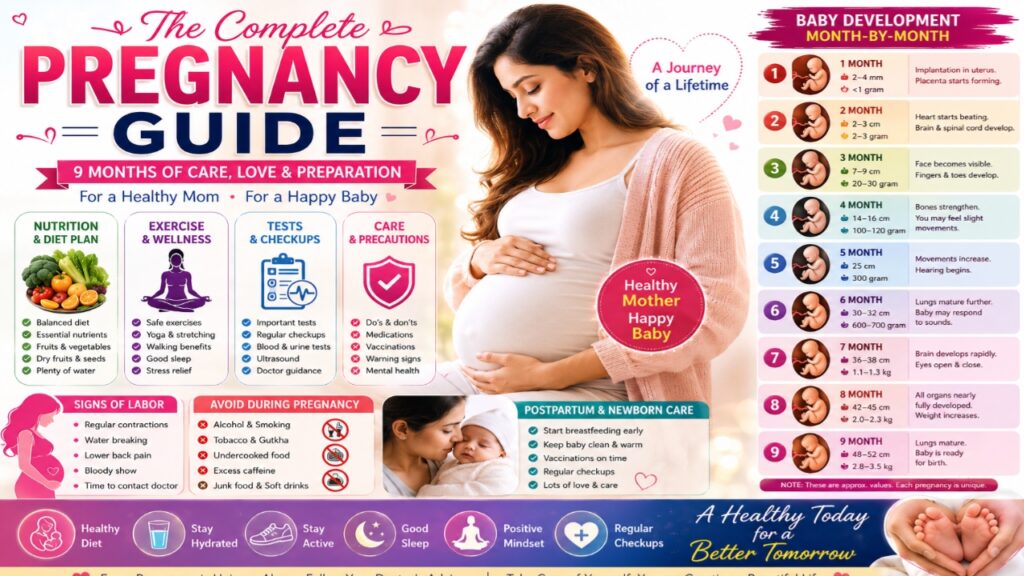
Pregnancy is a remarkable nine-month journey during which both the mother and the baby experience continuous growth and change. Every month, the baby’s organs develop further, while its weight and length gradually increase. The measurements provided below are approximate, and normal variations can occur from one pregnancy to another.
Month 1: Baby’s Development
- The fertilized egg implants in the uterus.
- The placenta begins to form.
- The embryo is extremely small.
Estimated Length: 2–4 mm
Estimated Weight: Less than 1 gram
Month 2: Baby’s Development
- The baby’s heart starts beating.
- The brain, spinal cord, and nervous system develop rapidly.
- Early formation of the arms and legs begins.
Estimated Length: 2–3 cm
Estimated Weight: 2–3 grams
Month 3: Baby’s Development
- Facial features become more recognizable.
- Fingers and toes develop.
- Most major organs are formed.
Estimated Length: 7–9 cm
Estimated Weight: 20–30 grams
Month 4: Baby’s Development
- Bones begin to strengthen.
- Rapid body growth continues.
- Some mothers may begin to feel slight fetal movements.
Estimated Length: 14–16 cm
Estimated Weight: 100–120 grams
Month 5: Baby’s Development
- The baby’s movements become more noticeable.
- Hair and eyebrows begin to grow.
- Hearing starts to develop.
Estimated Length: 25 cm
Estimated Weight: 300 grams
Month 6: Baby’s Development
- The skin continues to develop.
- The lungs mature further.
- The baby may respond to sounds.
Estimated Length: 30–32 cm
Estimated Weight: 600–700 grams
Month 7: Baby’s Development
- The brain develops rapidly.
- The baby can open and close its eyes.
- Body fat begins to accumulate.
Estimated Length: 36–38 cm
Estimated Weight: 1.1–1.3 kg
Month 8: Baby’s Development
- Nearly all organs are fully developed.
- The baby prepares for birth.
- Weight increases rapidly.
Estimated Length: 42–45 cm
Estimated Weight: 2.0–2.3 kg
Month 9: Baby’s Development
- The baby is almost fully developed.
- The lungs are mature.
- The baby is ready for birth.
Estimated Length: 48–52 cm
Estimated Weight:** 2.8–3.5 kg (average)
Signs of Labor
As labor approaches, you may notice the following signs:
- Regular contractions
- Frequent tightening of the uterus
- Water breaking (rupture of the amniotic sac)
- Blood-tinged mucus discharge (bloody show)
- Persistent lower back or abdominal pain
If you experience any of these signs, contact your doctor or go to the hospital immediately.
Normal Vaginal Delivery
If both the mother and baby are healthy and there are no medical complications, a normal vaginal delivery may be possible.
Potential Benefits:
- Faster recovery
- Shorter hospital stay
- Lower risk of certain surgical complications
Cesarean Section (C-Section)
If a vaginal delivery isn’t considered safe or if medical conditions require it, your doctor may recommend a Cesarean section. A C-section is a safe surgical procedure when medically necessary.
Postpartum Care for the Mother
After delivery, the mother should:
- Eat a nutritious and balanced diet.
- Drink plenty of water.
- Get enough rest.
- Take all prescribed medications as directed.
- Seek immediate medical care if experiencing heavy bleeding, high fever, or severe pain.
- Pay attention to emotional well-being and consult a doctor if prolonged sadness, anxiety, or depression develops.
Newborn Baby Care
- Begin breastfeeding as soon as possible after birth.
- Keep the baby clean and warm.
- Follow the recommended vaccination schedule.
- Attend regular pediatric check-ups.
- Give medicines only if prescribed by a healthcare professional.
Frequently Asked Questions (FAQ)
- Can I travel during pregnancy?
If your pregnancy is uncomplicated and your doctor approves, traveling is generally considered safe.
- Is exercise safe during pregnancy?
Yes. Gentle exercise can be beneficial when recommended by your healthcare provider.
- Do all pregnant women gain the same amount of weight?
No. Weight gain depends on pre-pregnancy weight, overall health, and individual circumstances.
- Can I fast during pregnancy?
If you wish to fast, consult your doctor first to ensure it is safe for you and your baby.
- Can using a mobile phone or laptop harm the baby?
Current scientific evidence does not clearly show that normal use directly harms the baby. But, excessive screen time may affect the mother’s sleep and overall well-being.
- Is it safe to dye my hair or be exposed to chemicals during pregnancy?
It is best to seek personalized advice from your healthcare provider before using hair dyes or being exposed to strong chemicals.
- Can stress affect the baby?
Chronic stress can negatively affect the mother’s health. Managing stress through rest, family support, and relaxation techniques is recommended.
- Are vaccinations necessary during pregnancy?
Yes. Vaccinations recommended by your doctor should be received on time.
- Does every woman experience pregnancy the same way?
No. Every pregnancy is unique, and symptoms and experiences vary from one woman to another.
- When should I visit the doctor after delivery?
Attend all scheduled postpartum follow-up appointments and contact your doctor immediately if you experience any unusual symptoms.
Ten Golden Rules for a Healthy Pregnancy
- Attend regular prenatal check-ups.
- Eat a balanced and nutritious diet.
- Stay well hydrated.
- Never take medicines without medical advice.
- Avoid smoking, alcohol, and tobacco completely.
- Get adequate sleep and rest.
- Engage in safe physical activity with your doctor’s approval.
- Manage stress effectively.
- Keep vaccinations and medical tests up to date.
- Never ignore unusual or concerning symptoms.
last Final Conclusion
Pregnancy is a natural yet extraordinary phase of life in which the health and well-being of both the mother and the baby are equally important. A nutritious diet, regular prenatal care, a healthy lifestyle, and timely medical attention are the foundations of a safe and healthy pregnancy.
Every pregnancy is unique. Rather than relying solely on information from the internet or the experiences of others, always follow the advice of your obstetrician and gynecologist who can provide guidance based on your individual health needs.
This three-part guide provides a comprehensive overview of pregnancy—from conception and fetal development to childbirth and newborn care—making it a valuable resource for blogs, websites, educational content, and general pregnancy awareness.